
Dive into msg_msg
Intro
이전의 포스트에서 msg_msg 를 이용해 힙 스프레이를 하는 방법을 포스트했다.
하지만 단지 힙 스프레이만을 통해서 내가 원하는 데이터를 넣는다고 msg_msg를 쓰는게 아니다. 앞서 기술했듯 msgsnd() 함수를 통해 힙에 데이터를 할당 했을 때, 앞의 48바이트는 msg_msg 구조체로 할당이 된다.
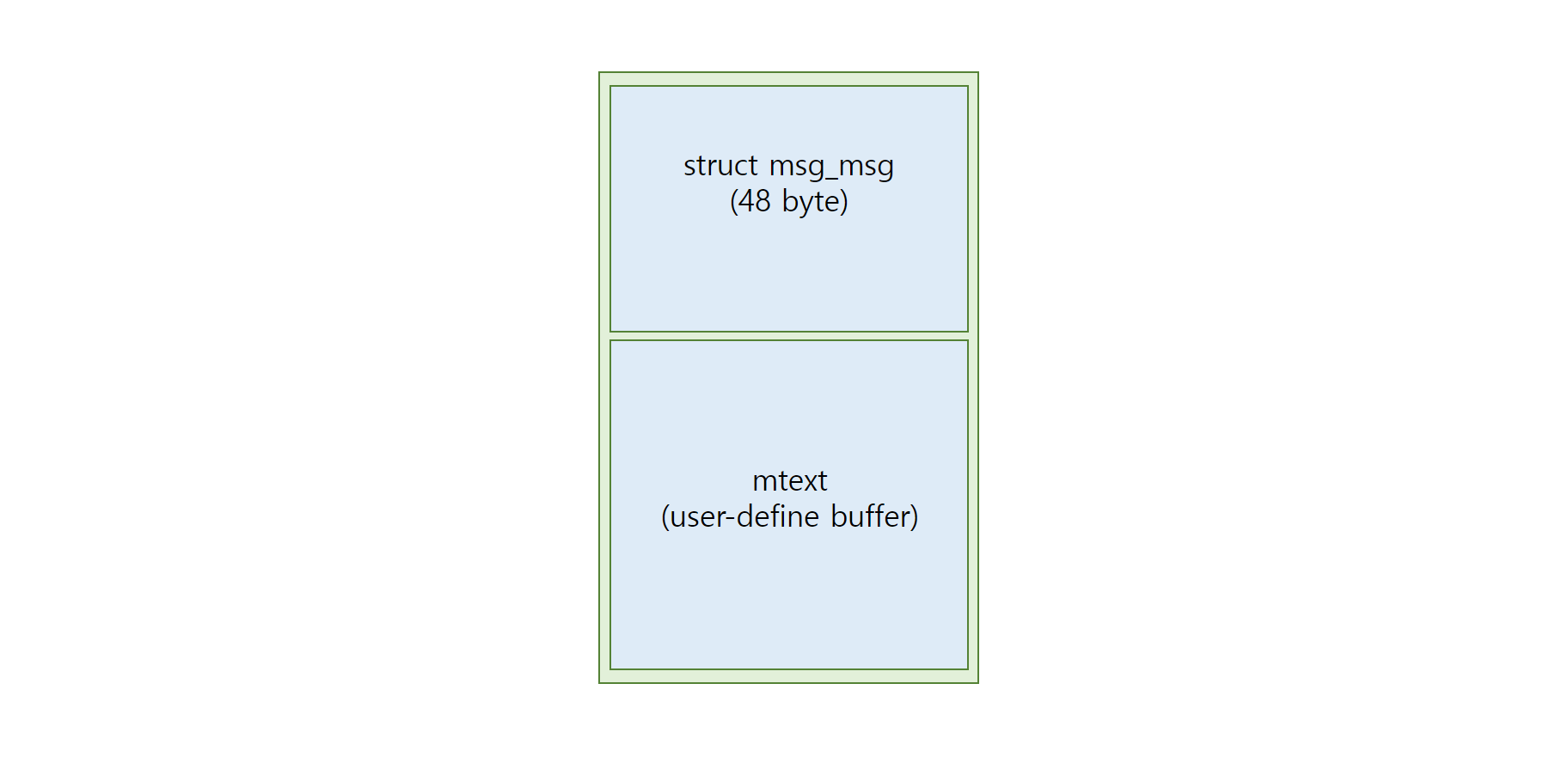
따라서 우리는 힙 스프레이를 한 후, oob 등의 취약점을 사용하기 위해서 msg_msg 구조체를 이용 할 수 있어야 한다.
Structure of msg_msg
먼저 msg_msg 구조체의 구조는 다음과 같다.
- include/linux/msg.h
/* one msg_msg structure for each message */
struct msg_msg {
	struct list_head m_list;
	long m_type;
	size_t m_ts;		/* message text size */
	struct msg_msgseg *next;
	void *security;
	/* the actual message follows immediately */
};
- include/linux/types.h
struct list_head {
	struct list_head *next, *prev;
};
- ipc/msgutil.c
struct msg_msgseg {
	struct msg_msgseg *next;
	/* the next part of the message follows immediately */
};
msgsnd syscall
먼저 msgsnd() 함수를 사용하여 msg_msg 가 어떻게 초기화 되는지 살펴보자.
앞서 기술한 것 처럼 sys_msgsnd 시스템 콜을 호출 하면 do_msg() 함수가 호출된다.
- ipc/msg.c
static long do_msgsnd(int msqid, long mtype, void __user *mtext,
		size_t msgsz, int msgflg)
{
	struct msg_queue *msq;
	struct msg_msg *msg;
	int err;
	struct ipc_namespace *ns;
	DEFINE_WAKE_Q(wake_q);

	ns = current->nsproxy->ipc_ns;

	if (msgsz > ns->msg_ctlmax || (long) msgsz < 0 || msqid < 0)
		return -EINVAL;
	if (mtype < 1)
		return -EINVAL;

	msg = load_msg(mtext, msgsz);
	if (IS_ERR(msg))
		return PTR_ERR(msg);

	msg->m_type = mtype;
	msg->m_ts = msgsz;

	rcu_read_lock();
	msq = msq_obtain_object_check(ns, msqid);
	if (IS_ERR(msq)) {
		err = PTR_ERR(msq);
		goto out_unlock1;
	}

	ipc_lock_object(&msq->q_perm);

	for (;;) {
		struct msg_sender s;

		err = -EACCES;
		if (ipcperms(ns, &msq->q_perm, S_IWUGO))
			goto out_unlock0;

		/* raced with RMID? */
		if (!ipc_valid_object(&msq->q_perm)) {
			err = -EIDRM;
			goto out_unlock0;
		}

		err = security_msg_queue_msgsnd(&msq->q_perm, msg, msgflg);
		if (err)
			goto out_unlock0;

		if (msg_fits_inqueue(msq, msgsz))
			break;

		/* queue full, wait: */
		if (msgflg & IPC_NOWAIT) {
			err = -EAGAIN;
			goto out_unlock0;
		}

		/* enqueue the sender and prepare to block */
		ss_add(msq, &s, msgsz);

		if (!ipc_rcu_getref(&msq->q_perm)) {
			err = -EIDRM;
			goto out_unlock0;
		}

		ipc_unlock_object(&msq->q_perm);
		rcu_read_unlock();
		schedule();

		rcu_read_lock();
		ipc_lock_object(&msq->q_perm);

		ipc_rcu_putref(&msq->q_perm, msg_rcu_free);
		/* raced with RMID? */
		if (!ipc_valid_object(&msq->q_perm)) {
			err = -EIDRM;
			goto out_unlock0;
		}
		ss_del(&s);

		if (signal_pending(current)) {
			err = -ERESTARTNOHAND;
			goto out_unlock0;
		}

	}

	ipc_update_pid(&msq->q_lspid, task_tgid(current));
	msq->q_stime = ktime_get_real_seconds();

	if (!pipelined_send(msq, msg, &wake_q)) {
		/* no one is waiting for this message, enqueue it */
		list_add_tail(&msg->m_list, &msq->q_messages);
		msq->q_cbytes += msgsz;
		msq->q_qnum++;
		atomic_add(msgsz, &ns->msg_bytes);
		atomic_inc(&ns->msg_hdrs);
	}

	err = 0;
	msg = NULL;

out_unlock0:
	ipc_unlock_object(&msq->q_perm);
	wake_up_q(&wake_q);
out_unlock1:
	rcu_read_unlock();
	if (msg != NULL)
		free_msg(msg);
	return err;
}
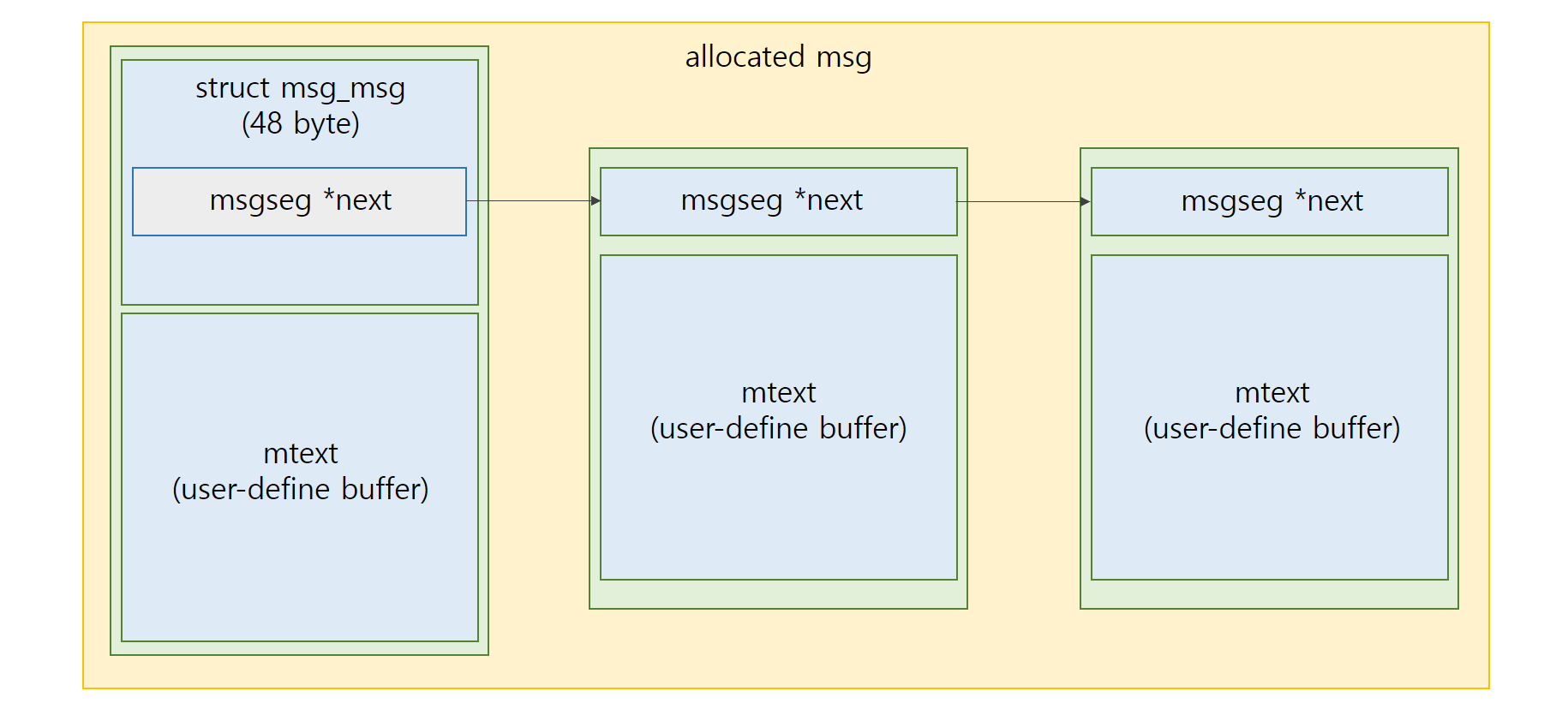
먼저 do_msgsnd() 힘수는 load_msg() 함수를 통해 메시지 객체를 할당하고 초기화 한다. load_msg() 함수는 alloc_msg() 함수로 메시지 객체를 할당하고, 할당한 객체는 msg_msg 구조체와 사용자가 지정한 m_text 으로 구성되어 있다.
보통 요청한 m_text크기가 1페이지 이상이면, msgseg 를 통해 최대 크기만큼 데이터를 끊어서 객체를 할당한다.
- ipc/msgutil.c
struct msg_msg *load_msg(const void __user *src, size_t len)
{
	struct msg_msg *msg;
	struct msg_msgseg *seg;
	int err = -EFAULT;
	size_t alen;

	msg = alloc_msg(len);
	if (msg == NULL)
		return ERR_PTR(-ENOMEM);

	alen = min(len, DATALEN_MSG);
	if (copy_from_user(msg + 1, src, alen))
		goto out_err;

	for (seg = msg->next; seg != NULL; seg = seg->next) {
		len -= alen;
		src = (char __user *)src + alen;
		alen = min(len, DATALEN_SEG);
		if (copy_from_user(seg + 1, src, alen))
			goto out_err;
	}

	err = security_msg_msg_alloc(msg);
	if (err)
		goto out_err;

	return msg;

out_err:
	free_msg(msg);
	return ERR_PTR(err);
}

/* ... */

static struct msg_msg *alloc_msg(size_t len)
{
	struct msg_msg *msg;
	struct msg_msgseg **pseg;
	size_t alen;

	alen = min(len, DATALEN_MSG);
	msg = kmalloc(sizeof(*msg) + alen, GFP_KERNEL_ACCOUNT);
	if (msg == NULL)
		return NULL;

	msg->next = NULL;
	msg->security = NULL;

	len -= alen;
	pseg = &msg->next;
	while (len > 0) {
		struct msg_msgseg *seg;

		cond_resched();

		alen = min(len, DATALEN_SEG);
		seg = kmalloc(sizeof(*seg) + alen, GFP_KERNEL_ACCOUNT);
		if (seg == NULL)
			goto out_err;
		*pseg = seg;
		seg->next = NULL;
		pseg = &seg->next;
		len -= alen;
	}

	return msg;

out_err:
	free_msg(msg);
	return NULL;
}
이 과정을 그림으로 간단하게 표현하면 다음과 같다.
메시지 객체를 생성한 다음, 해당 메시지를 요청한 id 의 queue에 append 해준다.
do_msgsnd() 함수의 다음 코드를 보자.
	msq = msq_obtain_object_check(ns, msqid);
    /*...*/
    if (!pipelined_send(msq, msg, &wake_q)) {
		/* no one is waiting for this message, enqueue it */
		list_add_tail(&msg->m_list, &msq->q_messages);
		msq->q_cbytes += msgsz;
		msq->q_qnum++;
		atomic_add(msgsz, &ns->msg_bytes);
		atomic_inc(&ns->msg_hdrs);
	}
msq 는 struct msg_queue 로 선언이 되어있고, 그 구조는 다음과 같다.
- ipc/msg.c
struct msg_queue {
	struct kern_ipc_perm q_perm;
	time64_t q_stime;		/* last msgsnd time */
	time64_t q_rtime;		/* last msgrcv time */
	time64_t q_ctime;		/* last change time */
	unsigned long q_cbytes;		/* current number of bytes on queue */
	unsigned long q_qnum;		/* number of messages in queue */
	unsigned long q_qbytes;		/* max number of bytes on queue */
	struct pid *q_lspid;		/* pid of last msgsnd */
	struct pid *q_lrpid;		/* last receive pid */

	struct list_head q_messages;
	struct list_head q_receivers;
	struct list_head q_senders;
} __randomize_layout;
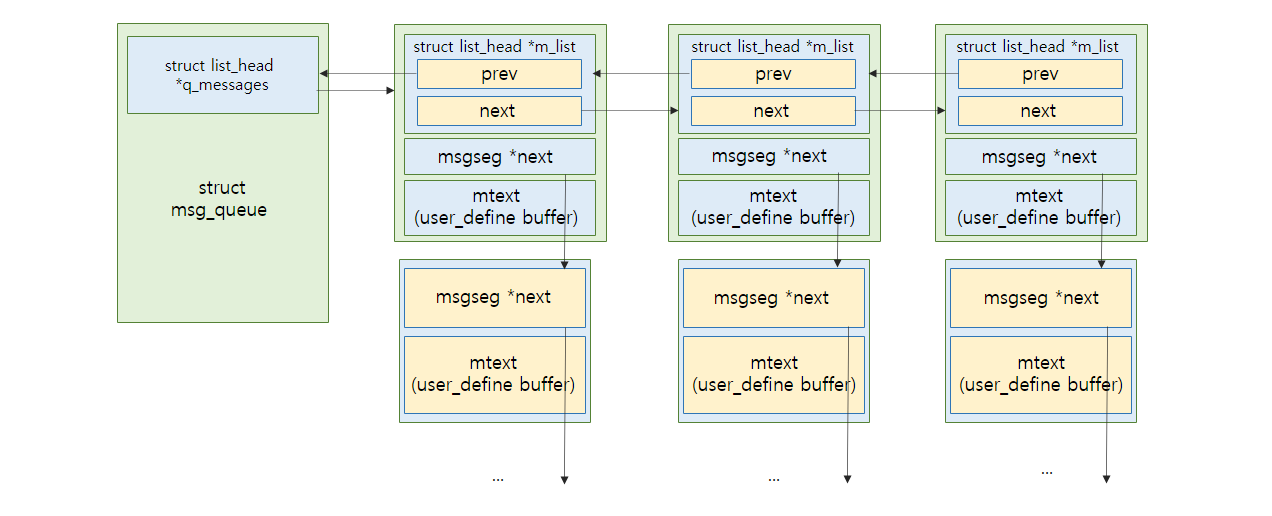
q_messages 필드는 유저의 요청으로 만들어준 메시지 객체가 저장되는 큐를 나타낸다.
pipelined_send() 함수를 통해 먼저 메시지를 받을 receiver 를 찾고, 해당 receiver가 없으면 해당 메시지 객체를 list_add_tail() 함수를 이용해 queue 에 보관한다.
- include/linux/list.h
/*
 * Insert a new entry between two known consecutive entries.
 *
 * This is only for internal list manipulation where we know
 * the prev/next entries already!
 */
static inline void __list_add(struct list_head *new,
			      struct list_head *prev,
			      struct list_head *next)
{
	if (!__list_add_valid(new, prev, next))
		return;

	next->prev = new;
	new->next = next;
	new->prev = prev;
	WRITE_ONCE(prev->next, new);
}


/*...*/

/**
 * list_add_tail - add a new entry
 * @new: new entry to be added
 * @head: list head to add it before
 *
 * Insert a new entry before the specified head.
 * This is useful for implementing queues.
 */
static inline void list_add_tail(struct list_head *new, struct list_head *head)
{
	__list_add(new, head->prev, head);
}
리스트에 데이터를 넣을 때는 리스트의 맨 앞에 넣는다. (왜 함수 이름이 list_add_tail인지 모르겠다 ㅋㅋ)
이를 그림으로 나타내면 다음과 같다.
msgrcv syscall
msgrcv syscall 을 호출하면 커널 내에서 do_msgrcv() 함수가 호출된다.
- ipc/msg.c
static long do_msgrcv(int msqid, void __user *buf, size_t bufsz, long msgtyp, int msgflg,
	       long (*msg_handler)(void __user *, struct msg_msg *, size_t))
{
	int mode;
	struct msg_queue *msq;
	struct ipc_namespace *ns;
	struct msg_msg *msg, *copy = NULL;
	DEFINE_WAKE_Q(wake_q);

	ns = current->nsproxy->ipc_ns;

	if (msqid < 0 || (long) bufsz < 0)
		return -EINVAL;

	if (msgflg & MSG_COPY) {
		if ((msgflg & MSG_EXCEPT) || !(msgflg & IPC_NOWAIT))
			return -EINVAL;
		copy = prepare_copy(buf, min_t(size_t, bufsz, ns->msg_ctlmax));
		if (IS_ERR(copy))
			return PTR_ERR(copy);
	}
	mode = convert_mode(&msgtyp, msgflg);

	rcu_read_lock();
	msq = msq_obtain_object_check(ns, msqid);
	if (IS_ERR(msq)) {
		rcu_read_unlock();
		free_copy(copy);
		return PTR_ERR(msq);
	}

	for (;;) {
		struct msg_receiver msr_d;

		msg = ERR_PTR(-EACCES);
		if (ipcperms(ns, &msq->q_perm, S_IRUGO))
			goto out_unlock1;

		ipc_lock_object(&msq->q_perm);

		/* raced with RMID? */
		if (!ipc_valid_object(&msq->q_perm)) {
			msg = ERR_PTR(-EIDRM);
			goto out_unlock0;
		}

		msg = find_msg(msq, &msgtyp, mode);
		if (!IS_ERR(msg)) {
			/*
			 * Found a suitable message.
			 * Unlink it from the queue.
			 */
			if ((bufsz < msg->m_ts) && !(msgflg & MSG_NOERROR)) {
				msg = ERR_PTR(-E2BIG);
				goto out_unlock0;
			}
			/*
			 * If we are copying, then do not unlink message and do
			 * not update queue parameters.
			 */
			if (msgflg & MSG_COPY) {
				msg = copy_msg(msg, copy);
				goto out_unlock0;
			}

			list_del(&msg->m_list);
			msq->q_qnum--;
			msq->q_rtime = ktime_get_real_seconds();
			ipc_update_pid(&msq->q_lrpid, task_tgid(current));
			msq->q_cbytes -= msg->m_ts;
			atomic_sub(msg->m_ts, &ns->msg_bytes);
			atomic_dec(&ns->msg_hdrs);
			ss_wakeup(msq, &wake_q, false);

			goto out_unlock0;
		}

		/* No message waiting. Wait for a message */
		if (msgflg & IPC_NOWAIT) {
			msg = ERR_PTR(-ENOMSG);
			goto out_unlock0;
		}

		list_add_tail(&msr_d.r_list, &msq->q_receivers);
		msr_d.r_tsk = current;
		msr_d.r_msgtype = msgtyp;
		msr_d.r_mode = mode;
		if (msgflg & MSG_NOERROR)
			msr_d.r_maxsize = INT_MAX;
		else
			msr_d.r_maxsize = bufsz;

		/* memory barrier not require due to ipc_lock_object() */
		WRITE_ONCE(msr_d.r_msg, ERR_PTR(-EAGAIN));

		/* memory barrier not required, we own ipc_lock_object() */
		__set_current_state(TASK_INTERRUPTIBLE);

		ipc_unlock_object(&msq->q_perm);
		rcu_read_unlock();
		schedule();

		/*
		 * Lockless receive, part 1:
		 * We don't hold a reference to the queue and getting a
		 * reference would defeat the idea of a lockless operation,
		 * thus the code relies on rcu to guarantee the existence of
		 * msq:
		 * Prior to destruction, expunge_all(-EIRDM) changes r_msg.
		 * Thus if r_msg is -EAGAIN, then the queue not yet destroyed.
		 */
		rcu_read_lock();

		/*
		 * Lockless receive, part 2:
		 * The work in pipelined_send() and expunge_all():
		 * - Set pointer to message
		 * - Queue the receiver task for later wakeup
		 * - Wake up the process after the lock is dropped.
		 *
		 * Should the process wake up before this wakeup (due to a
		 * signal) it will either see the message and continue ...
		 */
		msg = READ_ONCE(msr_d.r_msg);
		if (msg != ERR_PTR(-EAGAIN)) {
			/* see MSG_BARRIER for purpose/pairing */
			smp_acquire__after_ctrl_dep();

			goto out_unlock1;
		}

		 /*
		  * ... or see -EAGAIN, acquire the lock to check the message
		  * again.
		  */
		ipc_lock_object(&msq->q_perm);

		msg = READ_ONCE(msr_d.r_msg);
		if (msg != ERR_PTR(-EAGAIN))
			goto out_unlock0;

		list_del(&msr_d.r_list);
		if (signal_pending(current)) {
			msg = ERR_PTR(-ERESTARTNOHAND);
			goto out_unlock0;
		}

		ipc_unlock_object(&msq->q_perm);
	}

out_unlock0:
	ipc_unlock_object(&msq->q_perm);
	wake_up_q(&wake_q);
out_unlock1:
	rcu_read_unlock();
	if (IS_ERR(msg)) {
		free_copy(copy);
		return PTR_ERR(msg);
	}

	bufsz = msg_handler(buf, msg, bufsz);
	free_msg(msg);

	return bufsz;
}
위의 코드 중 다음 부분을 보자.
		msg = find_msg(msq, &msgtyp, mode);
		if (!IS_ERR(msg)) {
			/*
			 * Found a suitable message.
			 * Unlink it from the queue.
			 */
			if ((bufsz < msg->m_ts) && !(msgflg & MSG_NOERROR)) {
				msg = ERR_PTR(-E2BIG);
				goto out_unlock0;
			}
			/*
			 * If we are copying, then do not unlink message and do
			 * not update queue parameters.
			 */
			if (msgflg & MSG_COPY) {
				msg = copy_msg(msg, copy);
				goto out_unlock0;
			}

			list_del(&msg->m_list);
			msq->q_qnum--;
			msq->q_rtime = ktime_get_real_seconds();
			ipc_update_pid(&msq->q_lrpid, task_tgid(current));
			msq->q_cbytes -= msg->m_ts;
			atomic_sub(msg->m_ts, &ns->msg_bytes);
			atomic_dec(&ns->msg_hdrs);
			ss_wakeup(msq, &wake_q, false);

			goto out_unlock0;
            ...
        }

out_unlock0:
	ipc_unlock_object(&msq->q_perm);
	wake_up_q(&wake_q);
out_unlock1:
	rcu_read_unlock();
	if (IS_ERR(msg)) {
		free_copy(copy);
		return PTR_ERR(msg);
	}

	bufsz = msg_handler(buf, msg, bufsz);
	free_msg(msg);

	return bufsz;
find_msg() 함수를 통해 맞는 큐에서 리스트를 순회하며 msgtyp 이 일치하는 msg 객체를 가져오는 것을 확인할 수 있다.
- ipc/msg.c
static struct msg_msg *find_msg(struct msg_queue *msq, long *msgtyp, int mode)
{
	struct msg_msg *msg, *found = NULL;
	long count = 0;

	list_for_each_entry(msg, &msq->q_messages, m_list) {
		if (testmsg(msg, *msgtyp, mode) &&
		    !security_msg_queue_msgrcv(&msq->q_perm, msg, current,
					       *msgtyp, mode)) {
			if (mode == SEARCH_LESSEQUAL && msg->m_type != 1) {
				*msgtyp = msg->m_type - 1;
				found = msg;
			} else if (mode == SEARCH_NUMBER) {
				if (*msgtyp == count)
					return msg;
			} else
				return msg;
			count++;
		}
	}

	return found ?: ERR_PTR(-EAGAIN);
}
그 후 list_del()을 이용하여 해당 msg 객체를 리스트에서 해제하고, free_msg() 함수를 통해 msg 객체를 free 하는 것을 확인할 수 있다.
- include/linux/list.h
static inline void __list_del(struct list_head * prev, struct list_head * next)
{
	next->prev = prev;
	WRITE_ONCE(prev->next, next);
}

/* ... */

static inline void __list_del_entry(struct list_head *entry)
{
	if (!__list_del_entry_valid(entry))
		return;

	__list_del(entry->prev, entry->next);
}

/* ... */

/**
 * list_del - deletes entry from list.
 * @entry: the element to delete from the list.
 * Note: list_empty() on entry does not return true after this, the entry is
 * in an undefined state.
 */
static inline void list_del(struct list_head *entry)
{
	__list_del_entry(entry);
	entry->next = LIST_POISON1;
	entry->prev = LIST_POISON2;
}
Conclusion
즉 확인을 해 봤을때, 메시지 객체는 일종의 pt_malloc 처럼 더블 링크드 리스트 형태로 관리되는 것을 확인 할 수 있다.
만약 msg_msg 를 스프레이 한 상태에서 중간에 hole 을 생성하고, 그 부분에서 oob 를 트리거 할 수 있다면 msg_msg의 m_list 필드를 조작하여 특정부분의 주소를 릭 하거나, 특정 부분에 쓰기를 할 수 있을 가능성이 있다.